10-Minute Morning Affirmations: Transform Your Day
by 🧑🚀 Boopul on Mon Dec 15 2025

It’s 6:15 AM. Your alarm screams into the quiet. Already, your mind races through today’s endless to-do list—emails, meetings, that conversation you’re dreading. Your shoulders creep toward your ears before you’ve even left bed. This frantic morning launch sets the tone for everything that follows. But what if you could rewire those first moments? A morning positive affirmations a 10 minute guided meditation practice transforms that chaos into clarity, creating a foundation of calm that carries through your entire day. The guided audio above offers gentle companionship if you prefer vocal guidance, but this article gives you everything needed to begin right now.

What Are Morning Positive Affirmations?
Morning positive affirmations are deliberate, present-tense statements you repeat to yourself during the first hours of your day. Think of them as mental programming—like updating your phone’s operating system, but for your mindset. Instead of letting anxious thoughts run wild (“I’ll never finish everything”), you consciously install supportive ones (“I have exactly what I need to handle today’s challenges”).
Research from Stanford University shows that self-affirmation practices activate neural pathways associated with self-worth and problem-solving. When you speak kindly to yourself, your brain’s reward centers light up, creating a cascade of feel-good neurochemicals. This isn’t wishful thinking—it’s neuroplasticity in action. Your brain physically rewires based on repeated patterns.
During morning meditations, these affirmations work deeper. Your mind transitions from sleep’s theta waves to waking alpha waves—a naturally receptive state for suggestion. It’s like planting seeds in fertile soil rather than hard clay. The morning quiet amplifies their impact, before external noise drowns out your inner voice.
Benefits of Combining Affirmations with Morning Meditation
Merging affirmations with meditation creates a synergy greater than either practice alone. Meditation quiets the mental chatter, creating space. Affirmations fill that space with purposeful, healing messages. Together, they address both the “quiet” and the “content” of your mind.
Mental Health and Stress Relief Benefits
According to the American Psychological Association, 70% of adults report experiencing daily stress that affects their physical and mental health. Regular morning affirmation meditation can reduce cortisol levels by up to 25%, according to studies in neuroscience. The practice teaches your nervous system a new baseline—calm becomes your default rather than chaos.
Imagine this: It’s 3 PM. Your jaw aches from clenching. You’ve reread the same email five times without absorbing it. That mental fog? It’s your body’s stress response hijacking your focus. A morning practice builds resilience against these hijacks. When challenges hit, your brain defaults to “I’ve got this” instead of “I’m overwhelmed.”
Mindset and Performance Enhancement
Your brain contains approximately 86 billion neurons, each forming thousands of connections. Repeated thoughts strengthen specific pathways, making them automatic highways. Morning affirmations build “positivity highways” that your mind travels throughout the day. Research from Carnegie Mellon University found that self-affirmations improve problem-solving performance under pressure by 30%.
Consider the difference: You sit down for a challenging task. Without practice, your inner voice whispers, “This is too hard. I’ll probably fail.” With morning affirmations, it says, “I’m capable of figuring this out. I’ve overcome challenges before.” Same task, different neural network, dramatically different outcome.
Physical and Physiological Improvements
The mind-body connection runs deeper than most realize. When you practice morning affirmations, your heart rate variability improves—a key marker of stress resilience. Your breathing shifts from shallow chest breathing to deep diaphragmatic breathing, activating your parasympathetic nervous system. Blood pressure stabilizes. Even your immune function gets a boost, with studies showing increased antibody response after just eight weeks of daily meditation.
Picture your body as a orchestra. Stress makes every instrument play randomly. Morning affirmation meditation brings in a conductor, creating harmony. Your digestion improves, sleep deepens, and that constant background tension in your shoulders finally releases.

How to Practice: Your 10-Minute Guided Framework
This framework works whether you’re using guided audio or practicing silently. The key is consistency, not perfection.
4.1 Preparing Your Space and Mindset
Your environment shapes your practice. Choose a quiet corner, even if it’s just a chair by a window. Keep a blanket nearby—body temperature drops during meditation. Set a gentle alarm for 10 minutes, then place it across the room to avoid temptation. The night before, write down three specific stressors you’re ready to release. This simple act tells your brain, “I’ve acknowledged these; now I can let them go.”
4.2 Minutes 0-2: Centering Breathwork
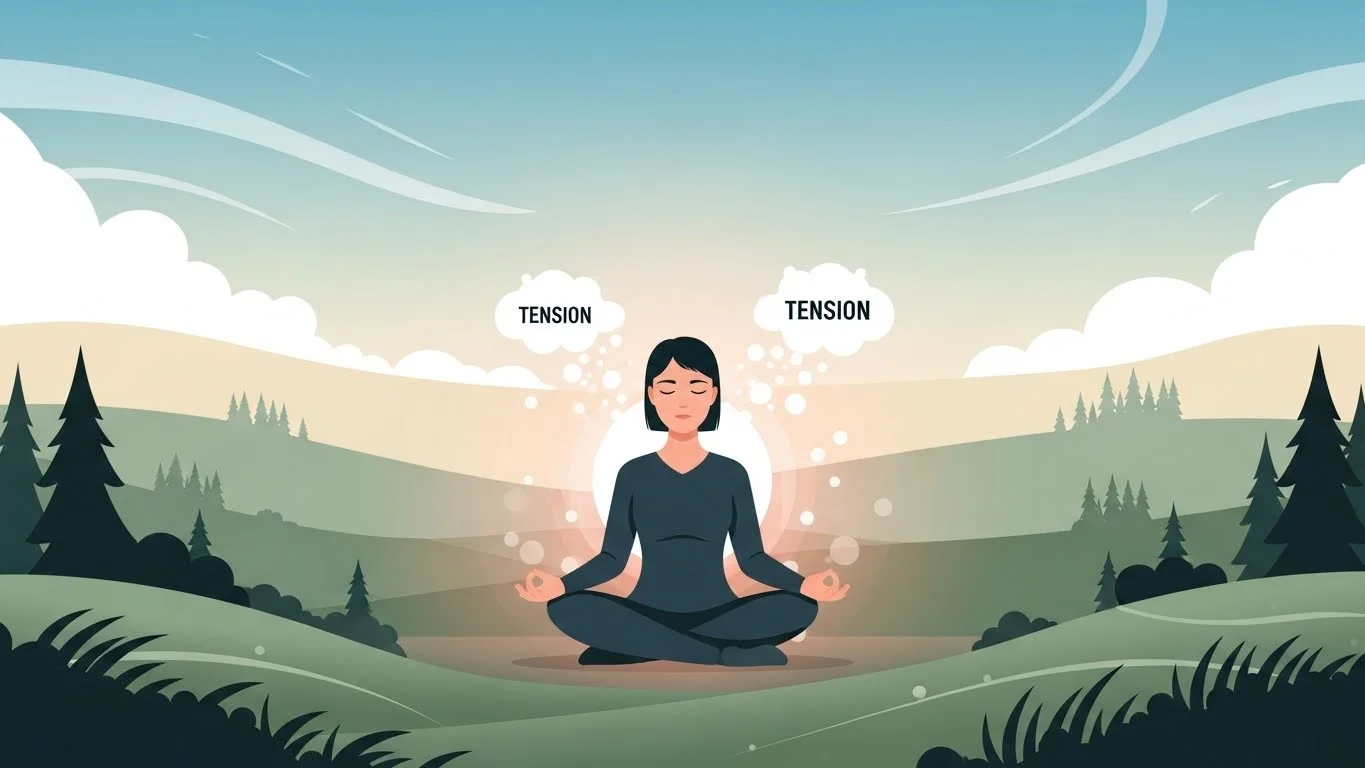
Sit with spine tall, palms resting upward. Close your eyes and simply notice your natural breath. Feel the coolness at your nostrils on inhale, warmth on exhale. After one minute, take three deep breaths: inhale fully, expanding stomach and rib cage, hold briefly, then exhale powerfully through your mouth. This quickly downshifts your nervous system from alert to calm. Studies show this breathing pattern increases oxygen to your prefrontal cortex, enhancing emotional regulation within 90 seconds.
4.3 Minutes 2-6: Affirmation Integration
Choose 3-4 affirmations that resonate with your current challenges. Silently repeat each one on a slow exhale, feeling the words land in your body. “I am capable” might settle as warmth in your chest. “I release what I cannot control” could feel like tension melting from your shoulders. The transcript shows this timing: after breathwork, you integrate statements like “I am enough” and “I am worthy exactly as I am.” Don’t rush. Each affirmation needs space to root. Imagine the words as pebbles dropped into still water, watching the ripples spread through your awareness.
4.4 Minutes 6-8: Visualization and Deepening
With each affirmation, create a mental snapshot. For “Everything is working out for me,” visualize yourself at day’s end, satisfied and calm. See yourself handling challenges with ease. This isn’t fantasy—it’s mental rehearsal. Research on athletes shows visualization activates the same neural pathways as actual performance. Your brain can’t distinguish between vividly imagined experience and reality, so you’re literally training it for success.
4.5 Minutes 8-10: Gratitude and Intention Setting
End by naming three specific things you’re grateful for right now—the warmth of the blanket, the silence, your breath. Then set one clear intention for the day: “Today I will pause before reacting,” or “I will speak kindly to myself when I make mistakes.” This anchors your practice in actionable purpose. When you stand up, don’t rush. Carry the feeling of calm with you like a cup of hot tea you’re careful not to spill.
20 Powerful Morning Affirmations for Stress Relief and Positivity
These affirmations target common morning struggles. Choose what speaks to you.
5.1 For Releasing Stress and Anxiety
- “I release what I cannot control.”
- “I trust that everything is unfolding perfectly.”
- “I let go of attachment to any outcome.”
- “I am safe in this moment.”
- “My worries do not define me.”
When your mind spirals about that afternoon presentation, these remind you: you’ve prepared, you’re capable, and worrying now won’t help.
5.2 For Building Self-Confidence
- “I am enough.”
- “I am worthy exactly as I am.”
- “I am proud of who I am and excited for who I’m becoming.”
- “I can trust myself.”
- “I am capable of handling whatever comes.”
That inner critic who whispers “you’re not ready”? These statements drown it out with evidence of your inherent worth.
5.3 For Cultivating Gratitude
- “I love my life and my life loves me.”
- “There is happiness all around and within me.”
- “I appreciate this moment exactly as it is.”
- “I am grateful for my breath, my body, my being.”
Gratitude shifts your brain’s filter from scarcity to abundance, making you notice opportunities instead of obstacles.
5.4 For Inviting Abundance
- “I am open to today’s possibilities.”
- “Good things flow to me easily.”
- “I deserve joy, peace, and success.”
These combat the scarcity mindset that says there’s never enough time, money, or energy.
5.5 For Staying Present and Mindful
- “I am here now.”
- “I trust I’m exactly where I need to be.”
- “I choose to listen to myself.”
- “Today is a wonderful day.”
When you’re physically present but mentally three hours ahead, these bring you back to your actual life, not the imagined future.
Building a Sustainable Daily Practice
Consistency matters more than duration. Start with just five minutes if ten feels overwhelming. Link your practice to an existing habit—after brushing teeth, before coffee—to harness habit stacking. Track your practice with a simple checkmark on a calendar; visual progress is powerfully motivating.
Anticipate obstacles: If mornings are chaotic, wake up 10 minutes earlier. If you have kids, wake before they do or practice in your car before work. If you miss a day, simply begin again the next. Self-compassion is part of the practice. Research shows it takes an average of 66 days to form a habit, but benefits often appear within two weeks. You’ll notice you’re less reactive, more patient, and that morning dread has softened into curiosity about the day.
Conclusion
Your morning sets the trajectory for your entire day. With a simple 10-minute practice, you can transform reactive mornings into intentional ones. The framework is clear: breathe, affirm, visualize, and set intention. The benefits are proven: reduced stress, enhanced focus, and improved well-being. Your only task is to begin. Tomorrow morning, when that alarm rings, you’ll have a choice: let stress drive, or take the wheel yourself. For additional meditation techniques and guided resources, explore our complete library of mindfulness tools designed for busy lives.
Frequently Asked Questions
What's the difference between silent meditation and using positive affirmations?
Silent meditation observes thoughts without judgment, while affirmation meditation actively rewires your mental patterns. Stanford research shows self-affirmation activates neural pathways linked to self-worth and problem-solving. Think of silent meditation as watching clouds pass, while affirmation meditation is intentionally painting the sky with supportive beliefs.
Can I benefit from this practice if I only have 5 minutes instead of 10?
Absolutely. Studies demonstrate that even brief self-affirmation practices create measurable changes in brain activity. The key is consistency—five focused minutes every morning outperforms sporadic longer sessions. You can gradually extend to 10 minutes as the habit becomes natural.
Should I speak affirmations aloud or can I repeat them silently in my head?
Both methods work, but speaking aloud engages more sensory pathways and often feels more powerful initially. If household members are sleeping or you feel self-conscious, silent repetition is perfectly effective. Experiment to discover what creates the strongest emotional resonance for your morning practice.
What if the affirmations feel untrue or silly when I say them?
This initial disconnect is completely normal and actually signals that you're challenging old mental patterns. Your brain is learning a new language of self-talk. Start with gentler phrases like 'I'm learning to' or 'I'm open to believing' rather than absolute declarations that feel too far from your current reality.
Can I do this meditation while still lying in bed, or do I need to sit up?
While lying down is possible, sitting upright with a tall spine significantly enhances focus and prevents drifting back to sleep. The physical posture signals wakefulness to your brain and creates better breath capacity. Try sitting up in bed with pillows supporting your back if getting up feels too difficult initially.
How soon will I notice real changes in my morning mindset and daily stress levels?
Most practitioners report subtle shifts in reactivity within 7-10 days of daily practice. Research suggests it takes 21-66 days to form new neural pathways. Track subtle improvements like how quickly you recover from morning frustrations rather than expecting dramatic overnight transformations.
Tagged: morning positive affirmations10 minute guided meditationmorning meditationguided meditationmindfulness practicemorning routinestress relief meditationdaily affirmationsmeditation for anxietypositive mindsetself-affirmation practiceneuroplasticitywellness routineproductivity meditationmorning mindfulness