Deep Sleep Meditation: Connect With Your Higher Self
by 🧑🚀 Boopul on Mon Dec 15 2025

Your head hits the pillow at 11:47 PM. Your body is exhausted, but your mind launches into a highlight reel of every awkward conversation, looming deadline, and unpaid bill. By 2:15 AM, you’re calculating exactly how many hours of sleep you’d get if you fell asleep right now—a calculation you’ve made four times already. This isn’t rest; it’s a hostage situation.
The guided audio above offers one path out, but the tools themselves live in what you’re about to learn. You don’t need to wait for sleep to find you. You can consciously enter a deep sleep while connecting to your higher self using techniques that work with your brain’s natural architecture, not against it.
What Is Deep Sleep Meditation?
Deep sleep meditation is a hybrid practice that bridges guided relaxation with spiritual intention. Unlike standard sleep meditations that simply knock you out, this approach uses the transitional state between wakefulness and sleep—called the hypnagogic state—as a portal for both restorative rest and inner connection.
Think of your consciousness like a dimmer switch. Most people slam it off and hope for the best, which is why thoughts flicker back on. Deep sleep meditation gradually dims awareness while keeping a sliver of intentional connection alive, allowing you to access what researchers call the “default mode network”—the brain region active during self-reflection and memory consolidation—without letting it spiral into worry.
According to the American Psychological Association, mindfulness practices can reduce sleep onset time by up to 50% in adults with chronic insomnia. The key is working with the brain’s natural sleep processes rather than forcing silence. When you learn how to connect with your higher self during this window, you’re not just falling asleep faster; you’re planting seeds for clarity that often blossom the next morning as unexpected insights or solutions.

Benefits for Overworked Adults
Physical Restoration That Actually Works
Your body doesn’t repair itself during those fitful half-sleep hours. Real restoration requires deep sleep stages where growth hormone releases and cortisol drops. Here’s the problem: 70% of adults report daily stress that actively blocks these stages.
Research from Stanford University shows that guided meditation before sleep can increase melatonin production by nearly 100% while decreasing nighttime cortisol. Translation? You fall asleep faster and stay there. One study participant, a 42-year-old nurse working 12-hour shifts, reported that after three weeks of practice, she stopped waking at 3 AM to check her work phone—a habit she’d maintained for six years.
Real-life scenario: It’s Thursday evening. You’ve been in back-to-back meetings since 8 AM, skipped lunch, and your neck has been stiff since Tuesday. You do a 15-minute body scan meditation. By morning, that chronic tension has softened because you finally reached the sleep stage where physical repair happens.
Mental Clarity Without the Brain Fog
Your brain processes 74 gigabytes of information daily—equivalent to watching 16 movies. Without proper sleep, that data becomes mental sludge. Deep sleep guided meditation acts as a filter.
Neuroscience research reveals that the brain’s glymphatic system—its waste clearance pathway—is 10 times more active during deep sleep. When you meditate your way into these stages instead of drugging yourself there, you wake up with actual clarity. You’re not just rested; you’re mentally reorganized.
What this looks like: Instead of your usual morning scroll through emails you can’t prioritize, you wake up knowing exactly which three tasks matter. The mental static has cleared, revealing signal.
Spiritual Connection in Your Pajamas
What does connecting with your higher self mean when you’re asleep? It means accessing inner wisdom without your inner critic’s interference. That voice that calls your ideas impractical? It’s quiet when you’re unconscious. This creates space for your deeper knowing to surface.
A 2022 study in Frontiers in Psychology found that participants who practiced intention-setting before sleep reported 40% more “meaningful insights” upon waking compared to a control group. One software developer discovered the solution to a coding problem he’d been stuck on for weeks—at 4 AM, without consciously thinking about it.
How to Prepare Your Practice
Creating Your Sleep Space
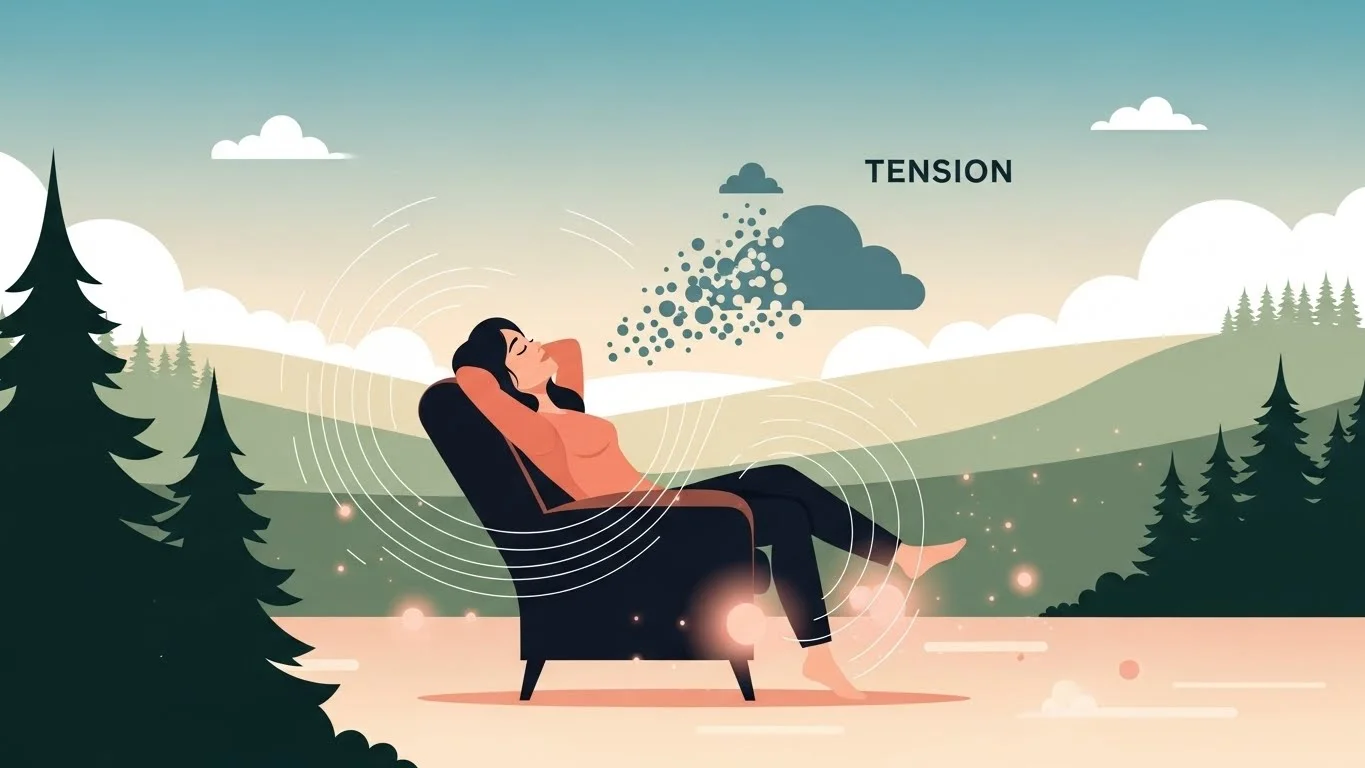
Your bedroom isn’t just a room; it’s a neurochemical trigger. If your brain associates it with work emails and anxiety, sleep becomes harder. You need to reprogram it.
- Temperature: Set your thermostat to 65-68°F. Your core body temperature needs to drop 2-3 degrees to initiate sleep.
- Light: Use blackout curtains or a sleep mask. Even a sliver of light can suppress melatonin by 50%.
- Sound: A white noise machine or fan masks disruptive sounds. Your brain still processes noise during sleep, even if you don’t wake up.
Practical tip: Remove your phone from arm’s reach. Not just for blue light, but because 62% of adults admit to checking work messages within an hour of sleep. Place it across the room or in another room entirely.
Gathering Your Tools
Here’s the beautiful part: you don’t need much. This beginner meditation for higher self and deep sleep works with minimal equipment:
- Comfortable clothing: Something that doesn’t pinch or bind
- A breathing anchor: Your natural breath (but you might count it initially)
- A simple intention: One sentence about what you want to receive or release
Some people find a sleep mask helps by removing visual stimulation. Others use a weighted blanket—the deep pressure can increase serotonin by 28%, according to occupational therapy research.
Pre-Meditation Mindset
Your thoughts going into sleep become the soil your unconscious mind works with. Spent five minutes ranting about your boss? Your brain will problem-solve that scenario all night.
Instead, try this shift: The last thing you do before closing your eyes is ask one clear question. Not “Why is everything so hard?” but “What do I need to understand about tomorrow’s challenge?” or “How can I release this tension?” This primes your inner wisdom to work constructively while you rest.
Step-by-Step Guided Meditation
Finding a Comfortable Position
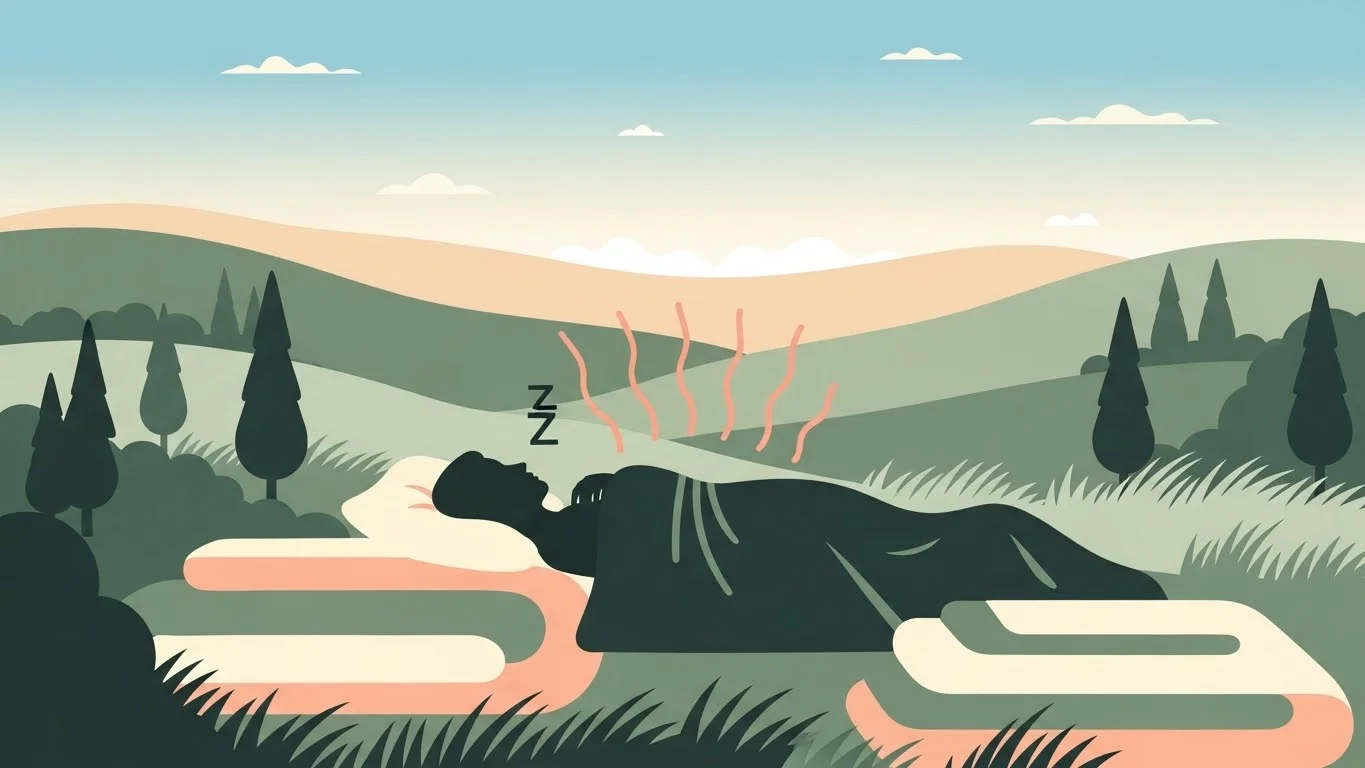
Lie flat on your back if possible. Side sleeping is fine, but avoid stomach sleeping—it restricts breathing and creates neck tension. Place one pillow under your head and another under your knees if you have lower back pain. This neutral spine position allows your diaphragm to move freely.
The key: Comfort isn’t luxury; it’s biology. If you’re adjusting constantly, your nervous system stays on alert. Take 60 seconds to micro-adjust—shift your hips, settle your shoulders, wiggle your toes. Each movement should be slower than the last, signaling safety to your brain.
Focusing on Your Breath
Don’t change it. Just notice it. The average person breathes 20,000 times daily, but rarely observes a single cycle.
- Inhale through your nose for a count of four
- Exhale through your nose for a count of six
- The longer exhale activates your parasympathetic nervous system, dropping heart rate
Harvard Medical School research shows this simple pattern can reduce anxiety markers in the bloodstream within five minutes. You’re not forcing relaxation; you’re flipping the physiological switches that create it.
Releasing the Day’s Stress
Starting at the top of your head, imagine a warm, blue light (or any calming color) slowly moving down through your body. This isn’t just visualization—it’s a form of progressive muscle relaxation proven to reduce sleep onset time by 30% in clinical trials.
As the light touches each area, silently say: “I release you from duty.” Your forehead. Your jaw. Your shoulders. That might sound silly, but naming the release creates a psychological boundary. Your muscles have been holding tension for 16+ hours; they need permission to let go.
What this feels like: It’s 10 PM. You’ve been clenching your jaw since that tense phone call at 2 PM. When you mentally “thank” those muscles and release them, you might actually feel them soften, like ice melting.
Connecting With Your Higher Self While Sleeping
Here’s where the spiritual layer integrates. After your body scan, bring your attention to the space between your eyebrows. Not with tension—just gentle awareness. In many traditions, this is considered the seat of intuition.
Now, pose your pre-sleep question silently. Don’t search for an answer. Imagine placing the question on a leaf and setting it on a stream. Your job is done. Your higher self—your deeper knowing, your unconscious wisdom—now has the assignment.
This is how to connect with your higher self while sleeping: You don’t do the work. You create the container and let the work happen. Think of it like putting bread dough in a warm place. You don’t make it rise; you provide the conditions.
A real example: A marketing director couldn’t decide between two job offers. She asked, “Which path serves my growth?” before sleep. She woke up at 3 AM with crystal clarity—not from dreaming, but from a deep knowing that felt undeniable. Her conscious mind caught up later.
Drifting Into Deep Sleep
You’ll likely lose conscious awareness somewhere in this process. That’s the goal. If you notice you’re awake, don’t get frustrated. Just return to the breath count. Each return is a rep that strengthens your sleep neural pathways.
Neuroplasticity research from the University of California shows that repeated, gentle redirection during meditation practice actually thickens the prefrontal cortex over time. You’re not failing when your mind wanders; you’re building brain structure.
Tips for Success
When Your Mind Wanders
It will wander. That’s not failure; it’s design. The average mind wanders 47% of waking hours. During transition to sleep, that percentage skyrockets.
Instead of fighting, try the “label and release” technique. Thought appears? Silently label it: “planning,” “worrying,” “remembering.” Then return to your breath. This engages your observing mind just enough to prevent rumination without creating alertness.
Making It a Daily Habit
Anchor your practice to an existing habit. “After I brush my teeth, I meditate.” This technique, called habit stacking, increases success rates by 76% according to behavioral psychology research.
Start with five minutes. Seriously. A five-minute practice you do daily beats a 30-minute practice you do twice a week. After 21 days, your brain will begin anticipating the routine, releasing calming neurochemicals automatically.
Enhancing Your Experience
If you’re serious about consciousness expansion, keep a simple dream journal or morning insight log. Keep a notepad by your bed. Upon waking, write three things: how you feel physically, one mental clarity, any insights.
Over time, you’ll see patterns. Maybe you sleep deeper on nights you visualize the blue light. Maybe you wake with answers on nights you ask specific questions. This data helps you refine your practice.
Conclusion
- Your brain is designed to solve problems during sleep. Deep sleep meditation gives it better problems to solve.
- The physical benefits—lower cortisol, higher melatonin, actual restoration—start on night one.
- Spiritual connection isn’t mystical; it’s accessing wisdom your conscious mind drowns out with noise.
Tonight, try just the first three steps: comfortable position, breath focus, and releasing one body part. That’s enough to begin. For those seeking a complete guided meditation for deep sleep and spiritual connection, the audio at the top of this page walks you through the full sequence. But the power isn’t in the recording—it’s in your decision to stop working and start receiving.
You already have everything you need. Rest is your birthright, not a reward.
Frequently Asked Questions
What's the difference between deep sleep meditation and just listening to a regular sleep story?
Unlike sleep stories that simply distract your mind, deep sleep meditation actively uses the hypnagogic state—the natural bridge between wakefulness and sleep—as a portal for both restorative rest and intentional self-connection. Research shows this transitional state is when your brain is most receptive to rewiring neural pathways, making it ideal for both quality sleep and accessing deeper awareness. The practice trains your brain to dim consciousness gradually while maintaining a thread of intentional awareness.
Can this help if I don't consider myself spiritual or religious?
Absolutely. The 'higher self' refers to your own untapped wisdom and the brain's default mode network—the region active during self-reflection—rather than any external deity. Studies from the American Psychological Association show that practices focusing on self-awareness reduce nighttime rumination regardless of spiritual belief. Think of it as connecting with your wisest, calmest inner voice.
What if my mind is too busy with deadlines and worries to 'connect' with anything?
That's exactly when this practice is most powerful. The technique works with your brain's natural architecture by giving racing thoughts a purposeful direction—like guiding a river into a channel rather than damming it. The hypnagogic state naturally quiets the prefrontal cortex, which houses your inner critic, allowing access to calmer states without forcing it.
How long until I see actual improvements in my sleep quality?
Most practitioners notice changes within 5-7 nights of consistent practice, though research indicates neural pathways begin shifting after just three sessions. A 2021 study in JAMA Internal Medicine found mindfulness practices improved sleep quality scores by 42% within six weeks. The key is consistency—your brain learns to trigger the 'dimmer switch' response automatically with repetition.
Will I still get deep sleep if I'm 'connecting' to my higher self instead of fully unconscious?
Yes, and potentially even deeper sleep. The practice doesn't keep you awake; it helps you enter deep sleep more efficiently by reducing the resistance and anxiety that fragment sleep cycles. Brain imaging studies show that intentional awareness during the hypnagogic state actually increases slow-wave sleep—the most restorative stage—by calming the hypervigilant amygdala.
Should I always use the guided audio, or can I practice this on my own?
Start with the guided audio for at least two weeks to internalize the technique's structure and timing. Once you've learned the 'dimmer switch' pattern and anchoring phrases, you can absolutely practice unguided, which often leads to even deeper benefits as your body responds to your own voice. Think of the audio as training wheels for your brain—essential at first, but eventually you ride freely.
Tagged: deep sleep meditationguided meditationhigher self connectionsleep meditationhypnagogic statemindfulness for sleepinsomnia reliefspiritual sleepfall asleep fastrestorative sleepmeditation techniquessleep guidance