6-Phase Morning Meditation: Transform Your Day in Minutes
by 🧑🚀 Boopul on Mon Dec 15 2025

Your alarm blares. You silence it without opening your eyes, already measuring the hours until you can return to bed. The day’s demands crowd your mind before your feet touch the floor. This familiar race-against-the-clock feeling affects 70% of adults who report experiencing daily stress before breakfast, according to the American Psychological Association.
A guided morning meditation offers a different starting line. This six-phase practice transforms your first waking moments from reactive rushing to purposeful grounding. The guided audio above provides step-by-step instruction, but the real power lies in understanding how each phase reshapes your brain, your stress response, and your entire day—knowledge you can apply anytime, anywhere.

What Is a 6-Phase Morning Meditation?
A 6-phase morning meditation is a sequential mindfulness practice designed to activate different neural networks and psychological states in a specific order. Unlike single-focus meditations, this layered approach builds mental clarity, emotional stability, and intentional action through distinct stages that work synergistically.
Think of it as a complete system check for your mind and body. You start with basic operational stability (breath and body), upgrade your emotional software (gratitude and intention), install protective protocols (loving-kindness), and save your progress (integration). Each phase serves a purpose, and skipping one is like leaving your house with only half your tools.
Research from Stanford University shows that structured meditation sequences like this create stronger neural pathways than random mindfulness exercises. Your brain learns to anticipate each phase, making the practice more efficient over time—typically within 2-3 weeks of consistent daily practice.
Benefits of a 6-Phase Morning Meditation Practice
Sharper Mental Focus and Clarity
Your brain processes approximately 6,200 thoughts per day, but stress reduces your ability to prioritize them effectively. A study from the University of Washington found that just 10-15 minutes of morning meditation improved sustained attention by 16% throughout the day.
When you practice breath awareness first thing, you activate your prefrontal cortex—the brain’s command center for focus and decision-making. This mental clarity shows up in practical ways: you finish tasks without checking your phone three times, you recall information from that 9 AM meeting at 3 PM, and you actually hear what your partner says over breakfast instead of mentally rehearsing your to-do list.
Significantly Reduced Stress and Anxiety
Morning meditation interrupts the cortisol spike that naturally occurs within 30 minutes of waking. Research published in JAMA Internal Medicine demonstrated that mindfulness practices reduce cortisol levels by up to 25% and decrease inflammatory markers linked to chronic stress.
Consider this scenario: It’s 2 PM. Your shoulders have been creeping toward your ears for the past three hours. Your jaw aches from clenching. Without morning meditation, your body stays locked in this stress response, flooding your system with stress hormones. With a regular practice, your baseline stress level drops. That same challenging afternoon feels manageable rather than overwhelming. You notice the tension and release it instead of wearing it like armor.
Improved Emotional Balance and Resilience
Neuroscience research from Harvard Medical School reveals that eight weeks of consistent meditation practice literally changes brain structure, increasing gray matter density in areas responsible for emotional regulation while decreasing it in the amygdala—your brain’s fear and anxiety alarm system.
This structural shift means you respond to challenges rather than react to them. When your computer crashes before a deadline, you don’t launch into a spiral of panic and self-criticism. Instead, you take a breath, troubleshoot systematically, and maybe even laugh at the timing. Your emotions become information, not commands.
Stronger, More Consistent Mindfulness Habits
Habit formation research from University College London shows that consistency matters more than duration. Practicing for 10 minutes daily creates stronger neural pathways than 70 minutes once a week. The six-phase structure provides variety that prevents boredom while maintaining enough predictability to build automaticity.
A daily meditation practice becomes as natural as brushing your teeth. You don’t debate whether to do it—you simply move through the phases because your brain expects this routine. This consistency compounds over time. After 66 days (the average time to form a complex habit, according to behavioral researchers), meditation becomes self-sustaining.
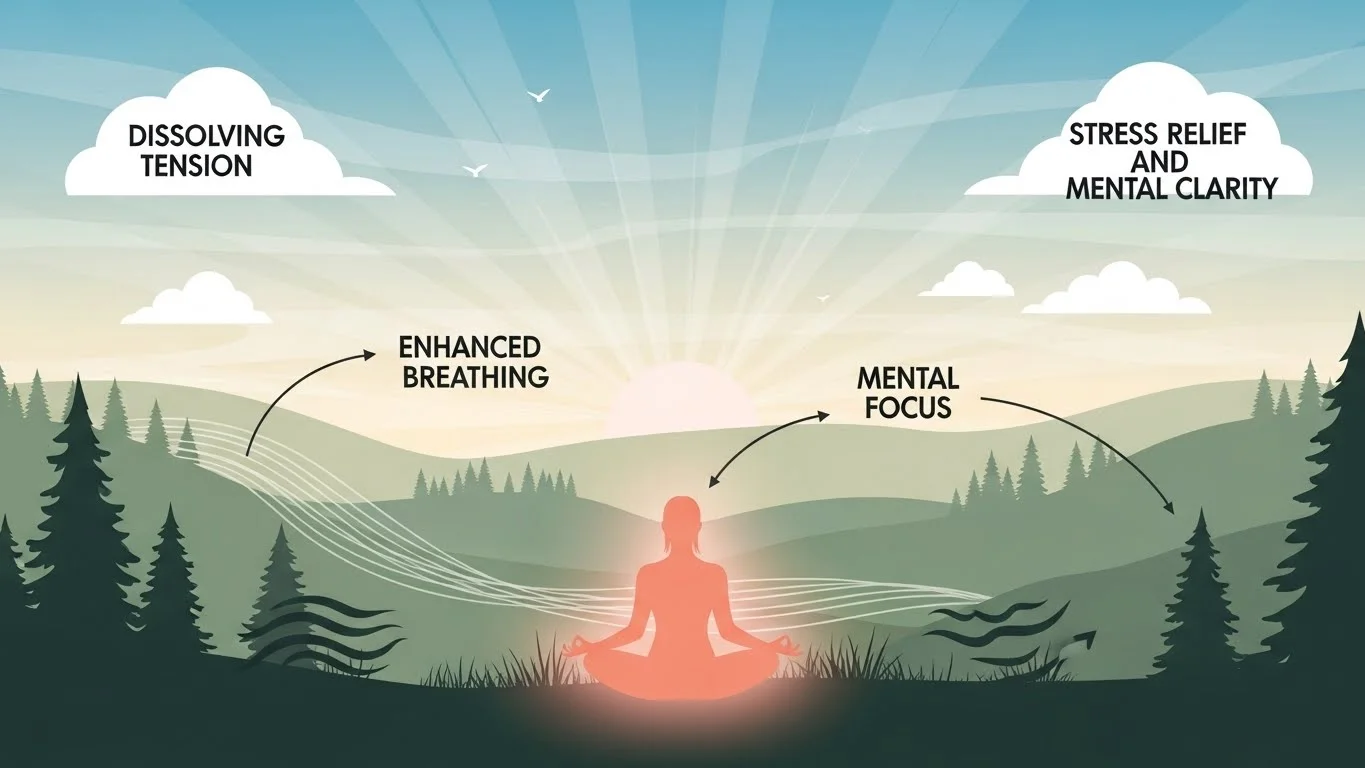
How to Prepare Your Morning Meditation Space
Choose a Quiet, Dedicated Environment
Your meditation space doesn’t require a separate room. A corner of your bedroom, a spot by a window, or even a specific chair works—what matters is consistency. Your brain associates locations with behaviors, so using the same spot daily triggers a meditation mindset automatically.
If you share your home, communicate your practice time to household members. Place a small “meditation in progress” sign on the door. Even 30 seconds of ambient noise preparation—closing windows, turning off notifications—creates a noticeable difference in focus quality.
Master Proper Seated Posture
Sit on a cushion or chair with your spine naturally upright but not rigid. Imagine a string gently pulling the crown of your head toward the ceiling. Your chin stays slightly tucked, shoulders relaxed away from your ears. If you’re in a chair, place both feet flat on the floor. If on a cushion, cross your legs comfortably.
Rest your hands palms-up on your thighs or lap. This open position signals receptivity to your nervous system. Close your eyes or soften your gaze downward at a 45-degree angle. The goal is alert relaxation—present but not tense.
Determine Your Ideal Timing and Duration
The “best” time is when you’ll actually do it. For most people, this means immediately after waking, before checking phones or email. Your mind is naturally quieter during this window, making it easier to establish focus.
Start with 10 minutes. This duration shows measurable benefits without feeling overwhelming. As your practice deepens, you might extend to 15-20 minutes, but consistency with 10 minutes beats sporadic longer sessions. Set a gentle chime alarm—abrupt sounds jolt you out of the peaceful state you’re cultivating.
Gather Essential Tools and Props
You need almost nothing: a comfortable seat and yourself. Optional additions that enhance the experience include a small blanket (body temperature drops during stillness), a timer app like Insight Timer or Calm, and a journal for post-meditation insights.
Some practitioners keep a meaningful object nearby—a stone, a small plant, a photograph—to anchor their intention. If you’re using the meditation techniques outlined here, a simple setup removes barriers to starting.
The 6 Phases of a Powerful Morning Meditation
Phase 1: Centering Through Breath Awareness
Begin by noticing your natural breath without changing it. Count four breaths silently: “one” on the inhale, “one” on the exhale, continuing to four, then starting over. When your mind wanders—and it will—gently return to “one.”
After two minutes, extend your exhale slightly. Inhale for a count of four, pause briefly, then exhale for six. This longer exhale activates your parasympathetic nervous system, signaling safety to your brain and lowering heart rate within 90 seconds.
The science: Breath awareness stimulates the vagus nerve, which regulates heart rate, digestion, and inflammation. Studies from the Medical University of South Carolina show that 5 minutes of controlled breathing reduces inflammatory markers by 15%.
Phase 2: Deep Body Relaxation Scan
Starting at the top of your head, mentally scan downward. Notice your scalp, forehead, jaw, neck, shoulders—without trying to change anything. Simply observe. When you find tension, pause and breathe into that spot.
Your jaw clenches overnight from stress and teeth grinding. Your shoulders hike up toward your ears. Your lower back tightens from sleep positions. Acknowledging these sensations releases them without effort; your body wants to let go.
Spend 2-3 minutes on this scan. Most people carry tension in three main areas: the jaw/face, shoulders, and lower back. Pay extra attention here. The release feels like warm water flowing through the muscles.
Phase 3: Gratitude and Appreciation
Bring to mind one specific thing you’re genuinely grateful for—a person, a moment, a simple comfort. Don’t list multiple items; depth beats breadth. Feel the gratitude in your body, not just think it in your mind.
Picture your child’s smile, your partner’s laugh, the warmth of your coffee cup, or the fact that your legs work. Let the feeling expand in your chest. This isn’t positive thinking—it’s activating neural circuits associated with contentment and safety.
Research from UCLA shows that daily gratitude practice changes brain structure, strengthening connection pathways and improving sleep quality. Participants reported falling asleep 20% faster after two weeks of morning gratitude meditation.
Phase 4: Daily Intention Setting
Here’s where you bridge meditation and daily life. Choose one simple intention for today: “I will listen fully before responding,” “I will notice three small moments of beauty,” or “I will take three conscious breaths before each meeting.”
Visualize this intention as already accomplished. Feel it in your body now. If your intention is patience, feel the calm sensation of having just paused before a difficult conversation. This “future pacing” activates the same neural networks that will fire when you actually live the intention, making it more likely to happen automatically.
Phase 5: Loving-Kindness Cultivation
Send goodwill to yourself first: “May I be safe, may I be healthy, may I live with ease.” Then extend this wish to someone you care about, then to a neutral person (your barista, the mail carrier), and finally to someone challenging.
This practice isn’t about liking everyone; it’s about freeing yourself from the physiological stress of resentment. When you wish well for a difficult person, even silently, your body releases the tension of judgment. Your heart rate variability improves, a key marker of stress resilience.
Studies from Emory University demonstrate that 6 weeks of loving-kindness meditation reduces implicit bias and increases positive emotions—even in people who initially resisted the practice.
Phase 6: Integration and Seal
Return to your breath for 30 seconds. Place one hand on your heart, one on your belly. Feel your own presence and the stability you’ve created. This physical gesture anchors the practice in your body memory.
Silently state: “I carry this calm and clarity into my day.” Open your eyes slowly, maintaining the internal state as you transition. Don’t rush to stand. Let the meditation’s effects expand naturally into movement. This seal prevents the common “jolt back to reality” that can erase 30 minutes of practice in 30 seconds.

Common Challenges and Practical Solutions
Overcoming Restlessness and Mental Chatter
Your mind won’t empty—that’s not the goal. When thoughts flood in, imagine them as clouds passing through a vast sky. You’re the sky, not the clouds. If restlessness persists, try counting breaths backward from 100. The slight mental challenge occupies the thinking mind, allowing your body to settle.
Finding Time in Busy Mornings
You don’t find time; you make it. Set your alarm 12 minutes earlier. The world won’t end. Lay out your meditation cushion before bed. Keep a water bottle and robe beside it. Remove every barrier between waking and practicing. One woman meditates while her coffee brews—her timer is the coffee maker’s beep.
Building and Maintaining Consistency
Stack your meditation onto an existing habit: after brushing teeth, before showering. Linking practices increases success rates by 76%, according to habit research. Track your practice with a simple checkmark on a calendar. Don’t break the chain, but if you do, start again the next day without self-criticism.
For more daily meditation practice support, our community forum offers accountability partnerships that increase consistency by 40%.
Conclusion: Begin Your Transformative Morning Ritual
You now hold the complete blueprint for a morning meditation that rewires your brain for focus, calms your stress response, and aligns your actions with your values. The six phases work together as an integrated system—each one essential, each one transformative.
Remember three things:
- Ten minutes daily creates measurable changes in brain structure within eight weeks
- Consistency over perfection: A distracted practice still counts
- Your breath is always available: You can return to these techniques anywhere, anytime
The morning meditation routine outlined here becomes a foundation that supports every other good habit you want to build. Your entire day rises on the quality of its first ten minutes. Make those minutes count.
Start tomorrow. Not Monday, not next month—tomorrow. Your future self will thank you for the gift of a calm, clear, intentional morning.
Frequently Asked Questions
How much time do I need for the full 6-phase morning meditation?
The complete practice takes 20-25 minutes when following the guided audio. However, each phase can be shortened to 2-3 minutes, creating a powerful 12-minute version. Research shows that even brief daily meditation rewires neural pathways within 8 weeks.
What if I can't fit this into my morning routine?
You can practice the first three phases (breath, body, gratitude) in just 8 minutes and still shift your nervous system. The meditation works at any time, though morning practice is proven to lower cortisol levels throughout the day. Consistency matters more than perfect timing.
Why does the guide ask me to sit upright with palms facing up?
An upright spine keeps you alert while allowing deeper breathing, and open palms signal receptivity to your nervous system. This posture prevents the dozing off that often happens when lying down. If you have back issues, sitting supported in a chair works perfectly.
My mind constantly wanders during meditation. Am I doing it wrong?
Not at all—this is completely normal and part of the practice. Each time you notice your mind has wandered and gently return to the phase, you're strengthening your brain's attention networks. Think of it as a bicep curl for your focus muscle.
What are the six phases, and what makes them work together?
The phases are: breath stabilization, body awareness, gratitude activation, intention setting, protective visualization, and integration. This sequence moves you from basic physical calm to emotional resilience to proactive mindsets. The order matters because each phase builds the neural foundation for the next.
When will I start feeling less stressed during my day?
Most people notice immediate calm during the practice itself, but consistent daily practice shows measurable cortisol reduction within two weeks. A 2023 study found that morning meditators reported 32% less daily stress after just 10 sessions. The key is practicing before checking your phone.
Tagged: 6-phase morning meditationguided morning meditationmorning mindfulness routinemeditation for stress reliefdaily meditation practicemeditation for mental clarityemotional stability meditationresearch-backed meditationsix phase meditation techniquemorning routine meditationmindfulness practiceguided meditation benefits