10-Minute Bedtime Meditation: Fall Asleep Faster
by 🧑🚀 Boopul on Mon Dec 15 2025

Your mind is still racing at 11 PM, replaying that awkward conversation from earlier. Your shoulders are tight, your jaw is clenched, and sleep feels miles away. Sound familiar? You’re not alone—70% of adults report feeling stressed daily, and most bring that tension straight to bed. This 10 minute meditation for before you sleep can transform those restless nights into peaceful transitions. The guided audio above offers gentle support, but everything you need is right here in this article.
What Is a 10-Minute Bedtime Meditation?
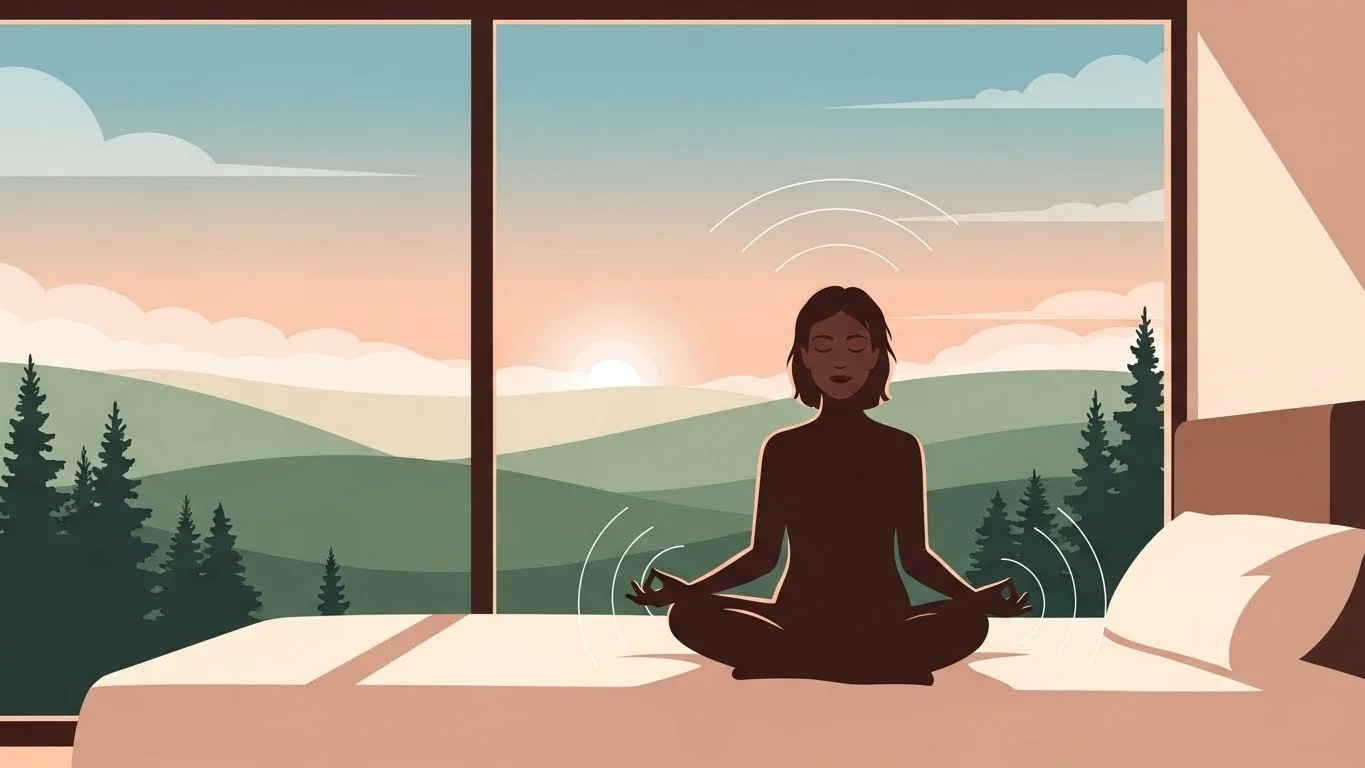
A 10-minute bedtime meditation is a structured mindfulness practice designed specifically to bridge your waking day and sleeping night. Unlike morning meditation that energizes, this practice actively downshifts your nervous system, signaling safety and rest to every cell in your body.
Think of it as a “shutdown sequence” for your brain—similar to how computers need proper closing procedures to prevent errors, your mind requires intentional transition time. You can practice sitting on your bed, lying down, or even in a nearby chair. The key is consistency and gentle focus, not perfect posture or empty-mindedness. Research from the American Psychological Association shows that even brief mindfulness practices can reduce cortisol levels by up to 25% in just one week.
Benefits of Pre-Sleep Meditation Practice
Faster Sleep Onset and Improved Sleep Quality
When you meditate before bed, you’re essentially training your brain to recognize sleep cues. Studies from Stanford University Sleep Medicine Center found that participants who practiced mindfulness meditation fell asleep twice as fast as the control group, with total sleep time increasing by an average of 42 minutes per night. The practice activates your parasympathetic nervous system—your body’s natural “rest and digest” mode—lowering heart rate and core body temperature, both essential for sleep initiation.
Reduced Nighttime Anxiety and Racing Thoughts
That mental spin cycle of tomorrow’s to-do list and today’s regrets? Meditation creates space between you and your thoughts. Neuroscience research using fMRI scans reveals that regular meditation shrinks the amygdala (your brain’s fear center) while strengthening the prefrontal cortex, your rational thought hub. It’s like upgrading from a jittery smoke alarm to a sophisticated security system—still alert, but not panicking at every creak.
Enhanced Physical Relaxation and Tension Release
Your body holds onto stress in concrete ways: tight shoulders, clenched jaw, shallow breathing. A body scan meditation systematically releases this physical tension. The average person breathes 20,000 times per day, but most of those breaths are shallow chest breaths that keep your body in low-grade fight-or-flight mode. Guided breathing exercises teach your diaphragm to move fully, massaging your vagus nerve and literally telling your heart to slow down.
Better Stress Management for the Following Day
Here’s the beautiful ripple effect: how you end today shapes how you begin tomorrow. Research published in the Journal of Occupational Health Psychology showed that employees who practiced 10 minutes of evening meditation reported 31% less emotional exhaustion the next day and handled workplace conflicts with significantly more patience. You’re not just improving sleep—you’re upgrading your entire stress resilience system.
Strengthened Mind-Body Connection
Many of us live “from the neck up,” ignoring our body’s signals until they scream. Bedtime meditation reconnects you to your physical self. You might notice that stomach tension you’ve been masking with coffee, or that your jaw has been clenched since lunch. This awareness is the first step toward genuine self-care, not just symptom management.

Why 10 Minutes Is the Ideal Duration for Busy Schedules
Ten minutes hits a sweet spot that shorter or longer sessions miss. Research on habit formation from University College London shows that tasks taking less than 2 minutes often feel insignificant (making them easy to skip), while those exceeding 20 minutes create too much resistance for busy schedules.
Ten minutes is substantial enough to trigger measurable physiological changes—your heart rate variability improves, cortisol drops, and alpha brain waves increase—but short enough to fit between brushing your teeth and turning out the light. It’s roughly the same time you spend scrolling social media before bed, which studies show actually increases sleep latency by 30 minutes due to blue light and mental stimulation.
For parents and professionals, 10 minutes represents a non-negotiable boundary that even the most demanding day can’t erase. It’s your daily declaration: “My rest matters.”
How to Prepare for Your 10-Minute Bedtime Meditation
Choosing and Setting Up Your Meditation Space
Your meditation space doesn’t need to be a zen garden—it needs to be consistent. Choose a spot you can return to nightly: the foot of your bed, a specific chair, or even a cushion on the floor. Keep a small basket nearby with essentials: a blanket (body temperature drops during meditation), socks if your feet get cold, and perhaps a lavender sachet.
The key is environmental priming: when you sit in this spot, your brain begins releasing calming neurotransmitters before you even close your eyes. It’s like how your kitchen triggers hunger cues—your meditation spot triggers relaxation.
Finding Your Optimal Body Position
Lying down is perfectly acceptable for bedtime meditation, contrary to popular belief. The concern about falling asleep is actually a feature, not a bug, for sleep meditation. If you prefer sitting, use enough pillows to support your back so you’re comfortable but not slouching. The goal is “alert relaxation”—think of a cat napping in a sunbeam, completely at ease but still aware.
Managing Technology and Minimizing Distractions
Ironically, the device you’re reading this on is your biggest meditation obstacle. Here’s the fix: set a 10-minute timer with a gentle chime (not a jarring alarm), then activate Do Not Disturb mode. Better yet, use a dedicated meditation app that blocks notifications. If using the guided audio at the top of this page, press play, dim your screen completely, and place the device face-down. The blue light from a dimmed screen 3 feet away won’t meaningfully disrupt melatonin production.
Determining the Right Time in Your Evening Routine
The sweet spot is 30-60 minutes before your intended sleep time. This gives your brain time to process the meditation’s calming effects without rushing. If you take sleep medication, meditate before taking it—this prevents the medication from hitting while you’re still active, which can cause confusion and grogginess.
For shift workers, consistency matters more than clock time. Meditate at the same point in your pre-sleep routine, whether that’s 8 AM or 8 PM.
Step-by-Step: 10-Minute Bedtime Meditation Guide
Minutes 0-2: Settling In and Connecting with Your Breath
Begin by taking three deep “cleansing breaths.” Inhale through your nose for 4 counts, feeling your belly expand like a balloon, then your ribcage. Hold briefly at the top—imagine pausing at the crest of a wave—then exhale through your mouth with a soft sigh, like fogging a mirror. This activates your diaphragm and signals safety to your nervous system.
After three breaths, let your breathing return to its natural rhythm. Don’t control it—just observe. Place one hand on your belly and one on your chest. Notice which hand moves more. Simply bringing awareness to your breath often slows it down by 20-30% without any effort.
Minutes 2-5: Body Scan and Progressive Muscle Relaxation
Start at the top of your head. Imagine a warm, golden light slowly moving down your body, like honey poured from a spoon. As it touches each area, consciously release any tension. When you reach your forehead, unclench your eyebrows. At your jaw, let your teeth part slightly. Many people store tension in their tongue—notice if it’s pressed against the roof of your mouth, and let it rest.
Move down to your shoulders. Most people hold them raised, as if perpetually shrugging. Let them drop dramatically, like a coat falling off a hanger. Continue down your arms, hands, torso, hips, legs, and feet. If you notice pain or discomfort, don’t fight it. Imagine breathing into that spot, sending oxygen and softness.
Minutes 5-8: Visualization for Deep Calm
Now engage your imagination—your brain’s most powerful relaxation tool. Picture yourself in a place where you feel completely safe and peaceful. This might be a real location (a childhood bedroom, a favorite beach) or imagined (a floating cloud, a cozy cabin). Engage all five senses: What do you see? What sounds surround you? Is there a scent? A taste? What does the air feel like against your skin?
Research from Harvard Medical School shows that vivid visualization activates the same brain regions as actual experience. Your body responds as if you’re really there—heart rate slows, muscles release, stress hormones decrease.
Minutes 8-10: Gratitude Reflection and Sleep Transition
In these final minutes, bring to mind three things from your day you’re grateful for. They can be profound (your health, a loving relationship) or simple (the perfect cup of coffee, a warm shower). The key is specificity—don’t just think “my partner,” but “the way my partner made me laugh at dinner.”
End with a gentle intention: “I release this day. I welcome rest.” Imagine your thoughts as leaves floating down a stream—you can watch them, but you don’t need to grab them. When your timer chimes, don’t jolt up. Let the sound fade naturally, and transition directly into sleep.

Common Challenges and Practical Solutions
Dealing with Persistent Racing Thoughts
Your mind will wander—this isn’t failure, it’s neuroscience. The default mode network in your brain is designed to generate thoughts when you’re not focused on a task. When you notice you’ve drifted, simply label it: “thinking.” Then gently return to your breath, like returning a puppy to its bed. Each return strengthens your mental muscle. Studies show that even experienced meditators have wandering thoughts every 12-15 seconds. The magic isn’t in never wandering—it’s in how kindly you return.
What to Do If You Fall Asleep Mid-Practice
Celebrate! This means your body needed rest and trusted you enough to take it. Unlike daytime meditation where sleep is counterproductive, for bedtime meditation, sleep is the goal. If you consistently fall asleep within the first 3 minutes, you might be sleep-deprived. Try meditating 30 minutes earlier, or consider that your body is telling you it needs more total sleep.
Managing Physical Discomfort or Restlessness
If your nose itches, scratch it. If you need to shift positions, move slowly and mindfully. The old “sit perfectly still” rule comes from monastic traditions where meditation was a daytime, alertness practice. For sleep meditation, comfort trumps stillness. If restlessness persists, try a “movement meditation” for the first minute: gentle neck rolls, shoulder shrugs, or ankle circles to release excess energy.
Building Consistency When You’re Short on Time
The “all-or-nothing” mindset is the enemy of habit. A 3-minute meditation you actually do beats a 10-minute meditation you skip. On truly chaotic nights, try “habit stacking”: meditate while the tea steeps, or during the last 5 minutes of a warm bath. Even 20 deep breaths before collapsing into bed creates a neural pathway you’re more likely to follow tomorrow.
Expert Tips for Maximizing Your Practice
Start with Guided Meditations Before Going Silent
Your brain is pattern-seeking. Guided meditations provide a scaffold that teaches your nervous system what relaxation feels like. After 2-3 weeks of guided practice, your body will begin relaxing automatically when you sit in your meditation spot. Think of it as training wheels for your nervous system. Our meditation guide offers progressive programs that transition you from guided to silent practice at your own pace.
Pair Meditation with Complementary Sleep Hygiene
Meditation amplifies other sleep practices. Combine it with a warm (not hot) shower 90 minutes before bed—your body’s cooling response afterward mimics the natural temperature drop that signals sleep. Add magnesium glycinate (200-400mg) and tart cherry juice (natural melatonin). This “sleep stack” creates a multi-sensory routine that makes your brain salivate for sleep like Pavlov’s dogs.
Track Your Progress Without Pressure
Use a simple 1-5 scale in your notes app: rate your ease of falling asleep and quality of rest. Don’t track meditation “quality”—that’s like grading a nap. After two weeks, look for patterns. Do you sleep better on meditation nights? That’s all the motivation you need. The goal is data, not judgment.
Adjust Techniques Based on Your Daily Needs
High-anxiety days call for body scans that release physical tension. Sad days benefit from gratitude practices. Angry days need forgiveness visualizations. Your meditation should fit your emotional weather, not be a one-size-fits-all raincoat. If you’re exploring different meditation techniques, our library includes specific practices for anxiety, grief, and overwhelm.
Integrating Meditation into Your Nightly Routine
Sample 30-Minute Wind-Down Schedules for Different Lifestyles
For the 9-to-5 Professional:
- 9:30 PM: Stop work emails, dim lights
- 9:35 PM: Warm shower
- 9:45 PM: 10-minute meditation
- 9:55 PM: Read fiction (paper book) in bed
- 10:00 PM: Lights out
For the Busy Parent:
- 8:30 PM: Kids in bed
- 8:35 PM: Quick tidy-up with kids’ help
- 8:45 PM: Family gratitude circle (2 minutes each)
- 8:50 PM: Personal 10-minute meditation while partner handles final kid duties
- 9:00 PM: Collapse into bed
For the Shift Worker:
- After shift: Light snack (banana with almond butter)
- 30 minutes of “decompression time” (no screens)
- 10-minute meditation in a specific chair (not bed—preserves bed-sleep association)
- Straight to sleep
Combining with Light Reading, Journaling, or Tea Rituals
Create a “sleep cascade”: meditation, then herbal tea (chamomile or lemon balm), then 5 minutes journaling. Write just 3 bullet points: one thing that went well today, one thing you’re letting go of, one thing you look forward to tomorrow. This closes mental loops that would otherwise circle at 2 AM.
Your sleep isn’t just a break between days—it’s the foundation your entire life rests upon. In just 10 minutes, you can shift from stressed and wired to calm and rested. The science is clear, the method is simple, and the benefits compound nightly. Start tonight. Your tomorrow self will thank you.
Frequently Asked Questions
Can I meditate lying down in bed or should I sit up?
Yes, lying down is perfectly fine for bedtime meditation. The goal is sleep, not alertness. If you fall asleep, you've succeeded. Just ensure your pillow supports your neck comfortably.
What should I do if I fall asleep during the meditation?
Nothing—it's ideal. The practice is working. If you want to complete the full 10 minutes, try meditating 30 minutes earlier when you're less tired.
Is 10 minutes really enough to improve my sleep?
Absolutely. Research shows measurable benefits from just 5 minutes daily. Ten minutes provides enough time to activate your parasympathetic response without creating a barrier to consistency.
How is this different from listening to sleep music or sounds?
Music and sounds are passive; meditation is active training for your attention muscle. While both can help, meditation creates lasting changes in brain structure that improve stress resilience even when you're not meditating.
Can I practice this if I'm a complete beginner?
This is designed for beginners. Start with the guided audio, focus on your breath when distracted, and remember: there's no way to do it wrong. Showing up is the entire practice.
What if my mind wanders constantly throughout the 10 minutes?
That's normal. Your brain generates thoughts like your heart beats—automatically. Each time you notice and return to your breath, you're doing the exact mental push-up that builds mindfulness.
Should I use the same meditation every night or switch it up?
Consistency builds habit, so stick with one style for at least two weeks. After that, vary based on your needs: body scan for tense days, visualization for anxious days, gratitude for low mood.
Tagged: 10 minute meditation before sleepbedtime meditationsleep meditationguided meditation for sleepmeditation for better sleepmindfulness for sleepfall asleep fasterimprove sleep qualitystress relief meditationpre sleep routinesleep hygiene tipsnighttime meditationsleep anxiety reliefmeditation for insomniabedtime mindfulness